What is Artificial Intelligence? From Machine Learning to Neural Networks
Artificial Intelligence (AI) is the ability of a computer or machine to perform tasks that normally require human intelligence. This includes learning from experience, understanding language, recognizing patterns, solving problems, and making decisions. AI is not one single technology — it's a broad field that includes machine learning, neural networks, natural language processing, and robotics.
This article explains what AI really is, how it works, the different types, and why it's transforming almost every industry — from healthcare to transportation.
The Big Picture: AI, ML, and Deep Learning
These three terms are often confused. Think of them like concentric circles:
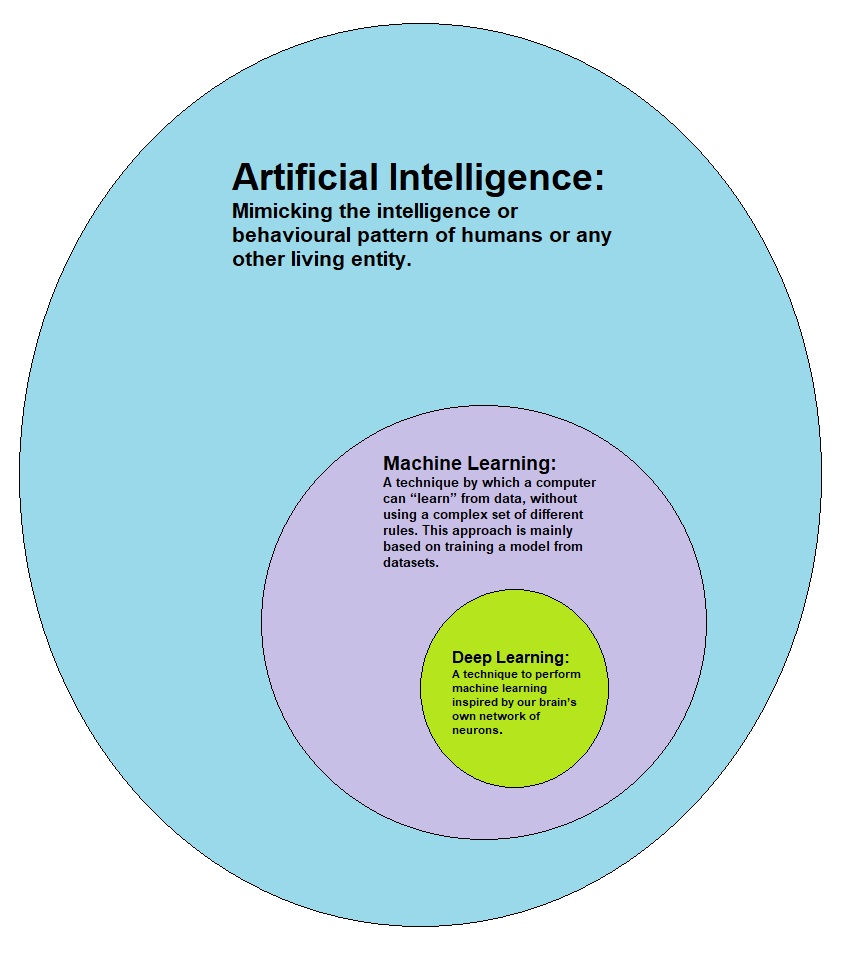
- Artificial Intelligence (AI): The broadest category. Any technique that enables machines to mimic human intelligence.
- Machine Learning (ML): A subset of AI. Systems that learn from data without being explicitly programmed.
- Deep Learning: A subset of ML. Uses neural networks with many layers (hence "deep") to learn from massive amounts of data.
Everything in Deep Learning is also Machine Learning, but not everything in Machine Learning is Deep Learning.
How Does Artificial Intelligence Work?
At its core, AI works by using algorithms and data. The general process is:
- Data Collection: The system needs lots of data — text, images, numbers, audio.
- Training: The algorithm finds patterns in the data. This is where "learning" happens.
- Testing: The system is tested on new data to see if it can apply what it learned.
- Deployment: Once accurate enough, the system is used in the real world.
- Feedback: The system continues to improve as it processes more data.
For example, a face recognition system is trained on millions of photos, learning to identify human faces in any image, even ones it has never seen before.
How a Neural Network Works: The Building Block of Modern AI
Modern AI — especially Deep Learning — relies on neural networks, which are loosely inspired by the human brain. A neural network consists of:
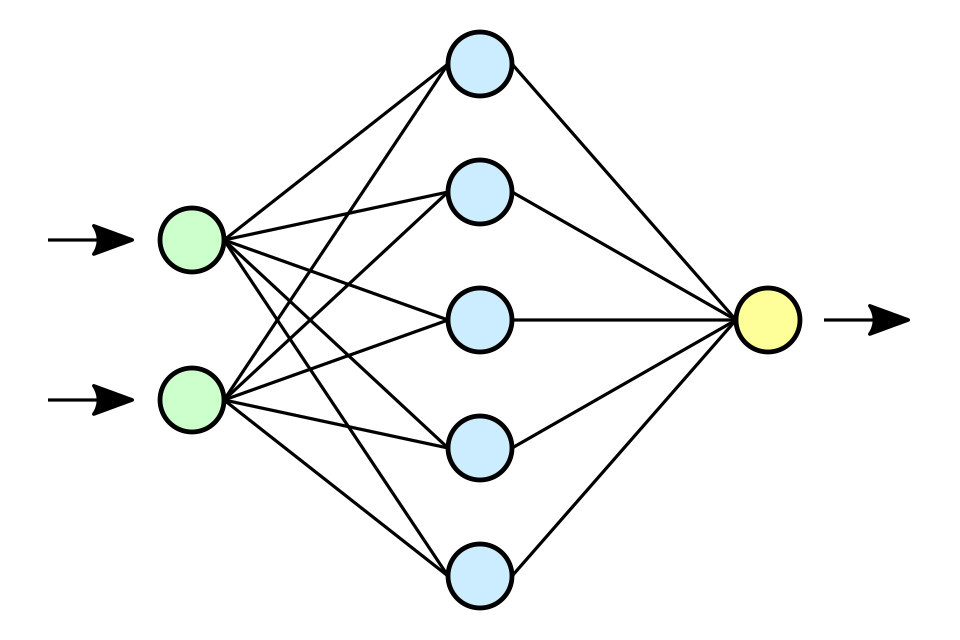
- Input Layer: Neurons that receive the initial data (e.g., pixel values of an image).
- Hidden Layers: One or more layers between input and output. They perform complex computations and extract patterns.
- Output Layer: The final layer that produces the result (e.g., "this is a cat" or "this is a dog").
- Weights and Biases: Each connection between neurons has a weight that adjusts as the network learns. The network adjusts these weights during training to minimize errors.
- Activation Functions: Mathematical functions that determine whether a neuron "fires" (sends a signal to the next layer).
The Training Process: How a Neural Network Learns
A neural network learns through a process called backpropagation:
- Forward Pass: Data flows through the network from input to output, generating a prediction.
- Loss Calculation: The network compares its prediction to the correct answer, calculating a loss (how wrong it was).
- Backward Pass: The loss is propagated backward through the network, adjusting weights to reduce future errors.
- Repeat: The process is repeated millions of times until the network becomes highly accurate.
This is similar to how you learn — by making mistakes, receiving feedback, and adjusting your approach.
Types of Machine Learning
| Type | How It Works | Example |
|---|---|---|
| Supervised Learning | The algorithm is trained on labeled data — input-output pairs. It learns to map inputs to outputs. | Email spam detection, image classification, house price prediction |
| Unsupervised Learning | The algorithm finds patterns in unlabeled data. It discovers hidden structures. | Customer segmentation, anomaly detection, market basket analysis |
| Reinforcement Learning | An agent learns by interacting with an environment and receiving rewards or penalties. | Game-playing AI (AlphaGo, Chess), robotics, self-driving cars |
| Self-Supervised Learning | The algorithm generates its own labels from the data itself. Bridges supervised and unsupervised learning. | Language models (GPT), image inpainting, video prediction |
Real-World Applications of AI
AI is already everywhere — often without you realizing it.
- Healthcare: AI helps doctors diagnose diseases from X-rays and MRIs more accurately than humans in some cases. It also accelerates drug discovery.
- Transportation: Self-driving cars use AI to perceive the road, avoid obstacles, and make decisions in real time.
- Customer Service: Chatbots handle customer queries 24/7, using natural language processing to understand and respond to questions.
- Entertainment: Recommendation systems (Netflix, YouTube, Spotify) suggest content based on your preferences.
- Finance: AI detects fraudulent transactions and automates high-frequency trading.
- Personal Assistants: Siri, Alexa, Google Assistant — all use AI to understand your voice and respond naturally.
Types of AI: Narrow, General, and Super
AI researchers also categorize AI by its capabilities:
- Narrow AI (Weak AI): What exists today. It can perform specific tasks well (like playing chess or identifying objects), but cannot transfer knowledge to other domains.
- General AI (Strong AI): A hypothetical AI that can understand, learn, and apply intelligence across any task — just like a human. It does not exist yet.
- Super AI: An AI that surpasses human intelligence in all areas. Pure speculation at this point — part of science fiction.
💡 Key insight: Almost all the AI you see today is Narrow AI. It's incredibly capable, but it's still far from human-level general intelligence.
Frequently Asked Questions (FAQ)
What is the difference between AI and machine learning?
AI is the broad field of making machines intelligent. Machine Learning is a specific approach to achieving AI — by training algorithms on data so they can learn and improve.
Does AI think like a human?
No. AI does not "think" the way humans do. It finds patterns in data and makes predictions based on those patterns. It has no consciousness, emotions, or self-awareness.
Is AI dangerous?
AI itself is not inherently dangerous — it's a tool. However, like any powerful technology, it can be misused. There are concerns about privacy, bias, job displacement, and autonomous weapons. Responsible development and regulation are crucial.
What is the role of data in AI?
Data is the fuel for AI. Without large, high-quality datasets, AI systems cannot learn effectively. The quality of an AI system depends largely on the quality of its training data. Garbage in, garbage out.
What is "training" a neural network?
Training is the process of feeding data through a neural network, adjusting its internal weights to reduce errors. It's like teaching a child to recognize animals by showing them many examples.
Conclusion
Artificial Intelligence is not just a buzzword — it's a fundamental shift in how we use computers. From the speech recognition in your phone to the cancer detection systems in hospitals, AI is already shaping our world.
Understanding what AI is, how it works, and what it can and cannot do, is essential for navigating the 21st century. And the journey is just beginning.