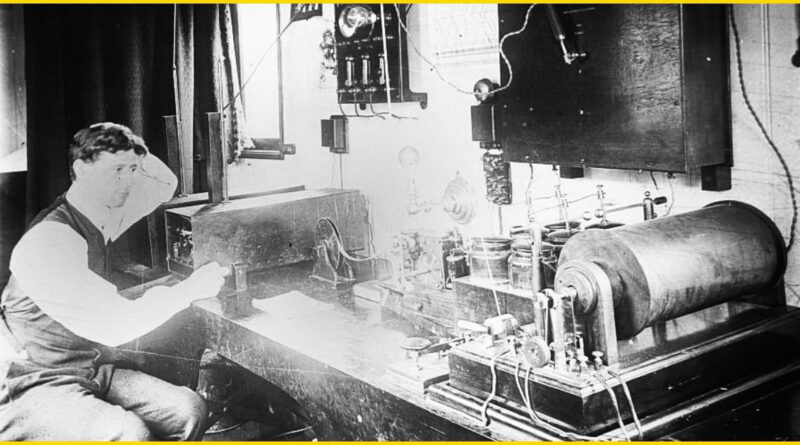
Who Invented the Radio: Marconi, Tesla, or Popov? The History of the Dispute
The invention of the radio is not credited to a single person, but is the result of incremental contributions by many scientists and inventors. While Guglielmo Marconi is often popularly called the «father of radio» for his pioneering work in wireless telegraphy and commercialization, the fundamental patents and theoretical groundwork were laid by Nikola Tesla, and the first practical demonstration of a radio receiver was made by Alexander Popov. This article delves into the complex history of this dispute to answer the question: who truly invented the radio?
Guglielmo Marconi: Wireless Telegraphy and the Nobel Prize
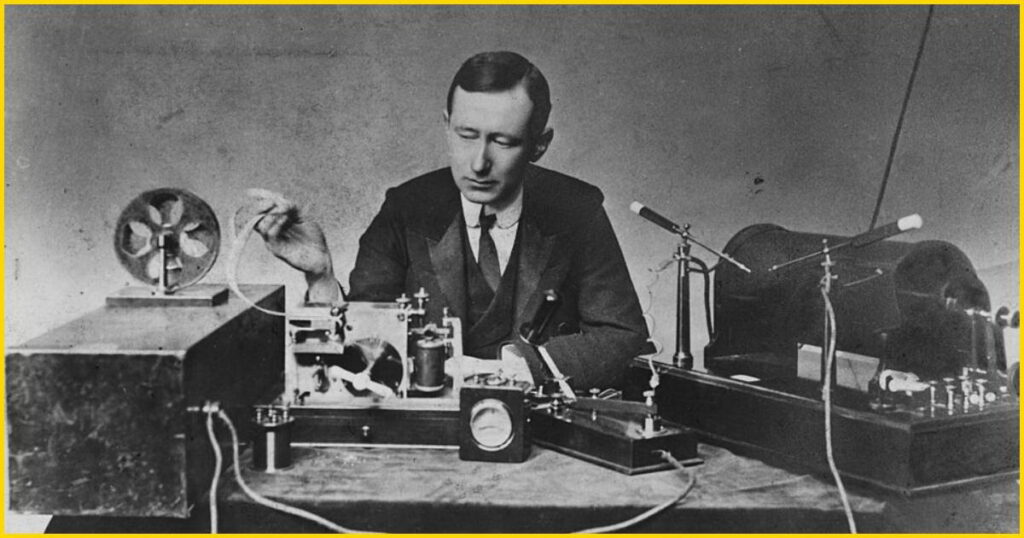
Guglielmo Marconi, an Italian inventor, is most famous for developing the first successful long-distance wireless telegraph system and for transmitting the first transatlantic radio signal in 1901.
- Early Work: Inspired by Heinrich Hertz’s experiments with electromagnetic waves, Marconi began his experiments in the early 1890s at his family’s estate in Pontecchio, Italy. His key innovation was not in discovering the waves but in practical engineering: he improved the coherer (a radio wave detector), developed effective antennas, and systematically increased transmission range.
- The First Patent: In 1896, Marconi filed his first patent in Britain for «Improvements in Transmitting Electrical Impulses and Signals and in Apparatus There-for.» He demonstrated his system to the British Post Office, achieving transmissions over several miles.
- Commercial Success and the Atlantic Crossing: Marconi founded the Wireless Telegraph & Signal Company (later Marconi Company) in 1897. His celebrated achievement was the reception of the letter «S» in Morse code (…), transmitted from Poldhu, Cornwall, to St. John’s, Newfoundland, in December 1901. This captured the world’s imagination and proved wireless communication’s viability across oceans.
- The 1909 Nobel Prize: Marconi shared the Nobel Prize in Physics with Karl Ferdinand Braun «in recognition of their contributions to the development of wireless telegraphy.» This award solidified his public image as the inventor of radio.
Nikola Tesla: Patents and Theory Preceding Marconi
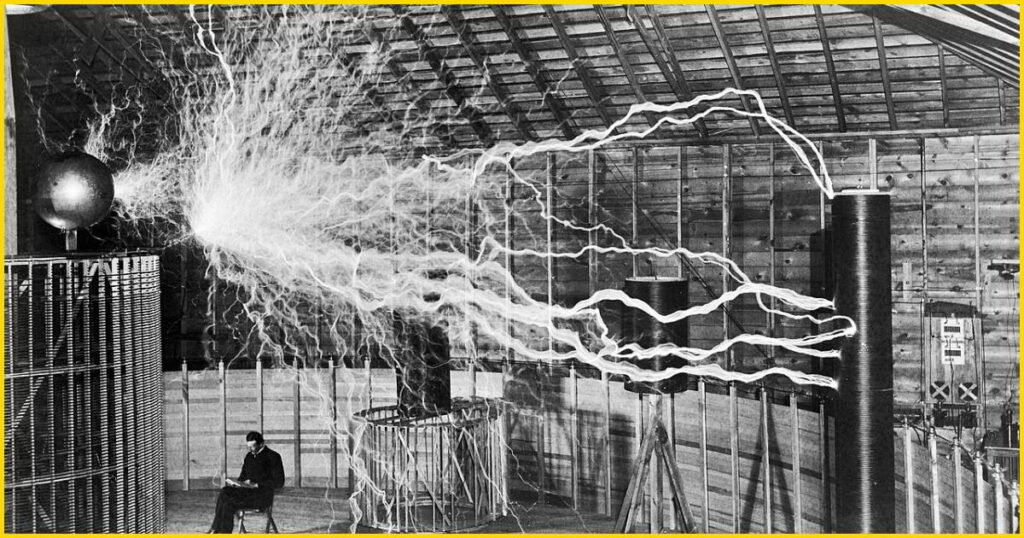
Years before Marconi’s transatlantic success, Nikola Tesla, the Serbian-American genius, had already conceptualized and patented the fundamental principles of radio communication.
- Public Demonstrations (1893): Tesla demonstrated the principles of wireless radio communication in lectures in St. Louis and Philadelphia. He transmitted electromagnetic energy without wires to light vacuum tubes.
- Key Patents (1897): Tesla was granted U.S. patents for a system of wireless transmission of electrical energy. His patents (e.g., U.S. Patent 645,576 and 649,621) described the use of tuned circuits for both transmitter and receiver—a foundational concept for selective radio communication that Marconi’s early systems lacked.
- The Legal Battle: In 1900, the U.S. Patent Office initially rejected Marconi’s application for a radio patent, citing Tesla’s prior work. However, after Marconi’s famous 1901 transatlantic transmission and with significant financial backing, he eventually received a key U.S. patent in 1904. Tesla sued for patent infringement. The legal battle dragged on for years.
- The Supreme Court Decision (1943): In a landmark decision, the U.S. Supreme Court overturned Marconi’s key 1904 patent, recognizing the priority of Tesla’s earlier patents. The ruling came shortly after Tesla’s death and is often cited as a posthumous vindication of his role as the radio’s true inventor. However, by then, Marconi’s name was already etched in public consciousness.
Alexander Popov: The «Thunderstorm Recorder» and First Antenna
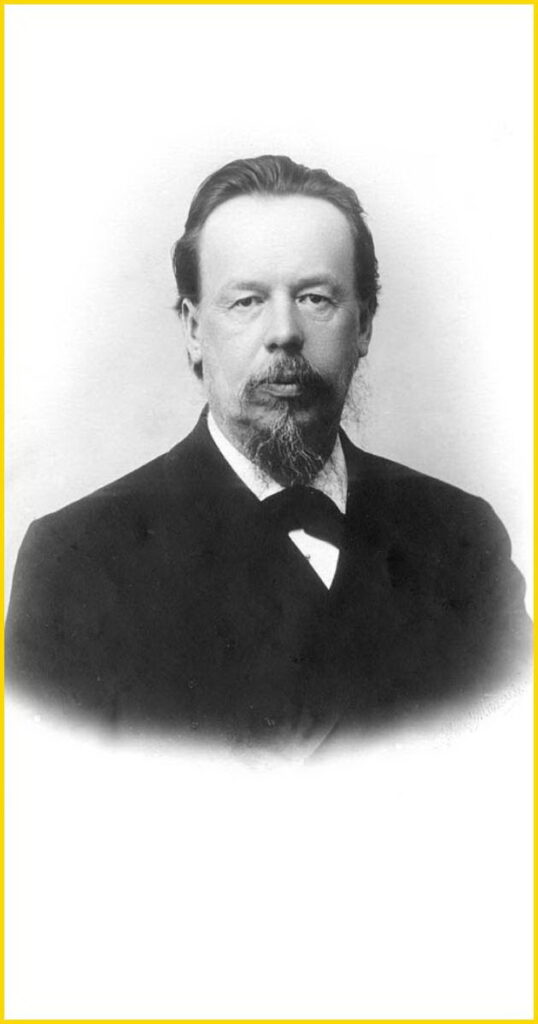
In Russia, Alexander Popov is celebrated as the inventor of radio. His work ran parallel to Marconi’s.
- The First Receiver (1895): On May 7, 1895, Popov presented a paper to the Russian Physical and Chemical Society in St. Petersburg, demonstrating a device he called a «thunderstorm recorder.» It was a radio receiver (using a coherer) designed to detect atmospheric electrical disturbances and lightning. This is considered by many historians as the world’s first practical radio receiver.
- Key Innovation — The Antenna: Popov’s crucial contribution was the introduction of a wire antenna attached to the coherer, dramatically improving reception range and sensitivity. Marconi later adopted a similar design.
- First Wireless Communication (1896): According to Russian sources, in March 1896, Popov demonstrated the transmission and reception of a radiogram—the words «Heinrich Hertz» in Morse code—between buildings at St. Petersburg University, predating Marconi’s documented demonstrations of message transmission.
- Focus on Science vs. Commerce: Unlike Marconi, Popov was a physicist and educator who saw his work primarily as scientific research. He did not aggressively pursue international patents or commercial development, which limited his global recognition at the time.
Timeline: Who Did What and When? (A Comparative Look)
Radio Pioneers Timeline: Who Did What and When?
| Date | Nikola Tesla | Alexander Popov | Guglielmo Marconi |
|---|---|---|---|
| 1893 |
Public lectures on wireless power and communication.
|
— |
— |
| 1895 | — |
May 7
Demonstrates the first radio receiver (“thunderstorm recorder”) with an antenna.
|
— |
| 1896 |
Files for key radio patents in the U.S.
|
March
Reportedly transmits first radiogram (“Heinrich Hertz”).
|
Files first patent in Britain; demonstrates wireless telegraphy over 2 miles.
|
| 1897 |
Granted fundamental U.S. patents for tuned radio systems.
|
Continues research, improves equipment.
|
Founds The Wireless Telegraph & Signal Company.
|
| 1901 | — |
— |
December
Successfully receives transatlantic radio signal (letter “S”).
|
| 1904 | — |
— |
Granted controversial U.S. patent after initial rejections.
|
| 1909 | — |
— |
Awarded Nobel Prize in Physics with Karl Braun.
|
| 1943 |
U.S. Supreme Court recognizes the priority of his patents, invalidating Marconi’s.
|
— |
— |
This comparative timeline highlights key milestones in the development of radio technology by three pioneering inventors. Note the overlapping developments and the posthumous legal recognition of Tesla’s contributions.
Patent Wars and the U.S. Supreme Court Verdict
The core of the legal dispute revolved around the «four tuned circuits» patent (U.S. Patent 763,772), granted to Marconi in 1904. Tesla, along with other inventors like Oliver Lodge, argued that Marconi’s system used principles they had already patented. The U.S. Patent Office had initially agreed. The lengthy court case culminated in the 1943 Supreme Court decision (Marconi Wireless Telegraph Co. of America v. United States). While the case was technically about the U.S. government using radio technology during WWI without paying royalties, the court’s ruling explicitly stated that Marconi’s patent was invalid due to the prior art of Tesla, Lodge, and John Stone. This legal verdict is a key piece of evidence for Tesla’s proponents.
So, Who Really Was the Inventor? (Analyzing Each Contribution)
Assigning sole credit is impossible because each man played a distinct and crucial role in the radio’s evolution:
- Nikola Tesla was the visionary theorist and patent-holder who laid the essential electronic groundwork, particularly the concept of tuned circuits.
- Alexander Popov was the practical scientist who built the first functional radio receiver with a critical component—the antenna—and demonstrated wireless communication of information.
- Guglielmo Marconi was the brilliant engineer and entrepreneur who integrated existing ideas, relentlessly improved the technology for distance and reliability, and, most importantly, successfully commercialized it on a global scale, making radio a practical reality.
Therefore, the most accurate answer is: Radio was invented through the combined work of Tesla, Popov, and Marconi, with Marconi receiving the lion’s share of contemporary fame and the Nobel Prize for his unparalleled role in its practical implementation and diffusion.
Frequently Asked Questions (FAQ)
Did Marconi steal Tesla’s ideas?
Marconi was certainly aware of the scientific work of his time, including Tesla’s demonstrations and publications. While he used principles discovered by others (like the coherer from Edouard Branly), the legal system ultimately found that his key 1904 patent infringed on Tesla’s prior patents. «Steal» is a strong word, but the courts ruled that he did not have a claim to the fundamental invention.
Why does Russia say Popov invented the radio?
Popov’s demonstration of a working radio receiver on May 7, 1895, predates Marconi’s documented, publicly recognized achievements. In Russia, this date is celebrated as «Radio Day.» Popov’s work was genuine and significant, but it was less widely publicized internationally outside scientific circles at the time.
What was the role of Heinrich Hertz?
Heinrich Hertz was the discoverer. In the 1880s, he experimentally proved the existence of electromagnetic waves predicted by James Clerk Maxwell. He did not work on communication. All radio inventors (Tesla, Popov, Marconi) were building upon «Hertzian waves.»
(Conclusion)
The story of the radio’s invention is a perfect case study in how history remembers not only the first discoverer but also the most effective promoter. While Alexander Popov built the first receiver and Nikola Tesla patented the core technology, it was Guglielmo Marconi who connected continents and captured the world’s imagination. The 1943 Supreme Court ruling serves as a historical correction, ensuring Tesla’s foundational role is recognized. Ultimately, the radio stands as a monument to collective genius.